How to Make a Classic Sourdough Starter from Scratch Recipe
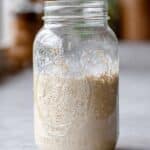
A detailed guide to creating and maintaining a sourdough starter from scratch using simple ingredients and step-by-step feedings to cultivate wild yeast for baking delicious sourdough bread.
- Prep Time: 10 minutes
- Cook Time: 0 minutes
- Total Time: 6 days (including multiple 24-hour resting periods)
- Yield: Approximately 1 cup active sourdough starter 1x
- Category: Starter
- Method: No-Cook
- Cuisine: American Artisan
- Diet: Vegan
Ingredients
Scale
Starter Ingredients
- ½ cup whole wheat flour or unbleached all-purpose flour
- ¼ to ⅓ cup water, ideally 75°F
Tools
- 1 glass jar or bowl (about 32 ounces)
- 1 paper towel
- 1 rubber band
Instructions
- Initial Mix: In a clean glass jar, combine ½ cup whole wheat or unbleached all-purpose flour with ¼ cup of water. Stir until the mixture resembles a pancake batter consistency; add up to an additional ¼ cup flour if needed. Cover the jar with a paper towel secured by a rubber band and let it rest for 30 minutes at room temperature.
- First Feeding: After resting, stir the mixture thoroughly. Cover again with the paper towel and rubber band. Let it sit at room temperature in a warm spot for 24 hours. After 24 hours, look for bubbles. If bubbles are present, feed the starter by adding ½ cup all-purpose flour and ¼ to ⅓ cup water. If no bubbles appear, stir the starter and wait another 24 hours before feeding.
- Second Feeding: Check for bubbles again. If bubbles are visible, discard half of the starter, feed with ½ cup all-purpose flour and ¼ to ⅓ cup water, stirring well. Allow it to sit for 24 hours.
- Third Feeding: Again, discard half of the starter. Feed with ½ cup all-purpose flour and ¼ cup water. Stir thoroughly and let it rest for 24 hours.
- Additional Feedings: From days 4 to 6, you may choose to feed the starter twice daily if you plan to use it soon. Continue this routine until the starter consistently bubbles and doubles in size within 8 hours of feeding.
- Maintenance: Once established, store the starter in the refrigerator and feed it about once a week. To reactivate for baking, remove from the refrigerator 24 hours prior to use, feed it, and allow it to come to room temperature to encourage growth.
Notes
- Use unbleached flour for best fermentation results.
- Maintain a warm environment around 75°F to encourage yeast activity.
- Discarding half the starter during feedings prevents overgrowth and maintains balance.
- Hydration consistency is key; aim for pancake batter thickness.
- Refrigerate the starter for slow fermentation when not baking frequently.
- Always use clean utensils to avoid contamination.
Keywords: sourdough starter, homemade starter, sourdough starter recipe, wild yeast starter, bread starter, fermentation, natural leavening